Native phone apps in Kotlin and SwiftUI from your web project
appgnt can now turn your chat-built app into native Kotlin for Android and SwiftUI for iOS. Here is how the native export works, why we added it, and what you still need to do yourself.
Notes from building a studio where a paragraph becomes a working app on every platform. We write about writing good briefs, deciding when an app needs a backend, getting past app store review, real running costs, and owning your code.
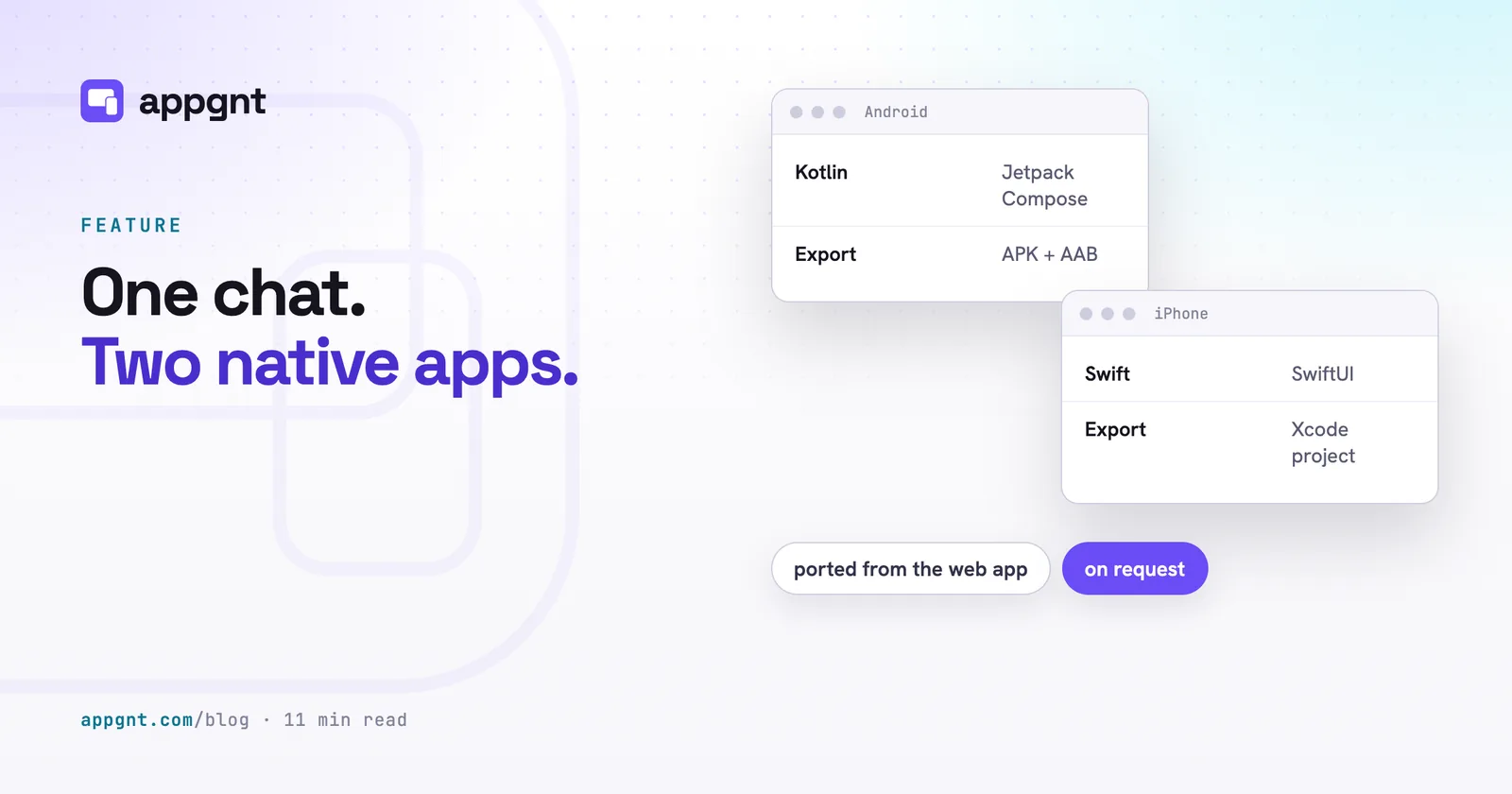
appgnt can now turn your chat-built app into native Kotlin for Android and SwiftUI for iOS. Here is how the native export works, why we added it, and what you still need to do yourself.
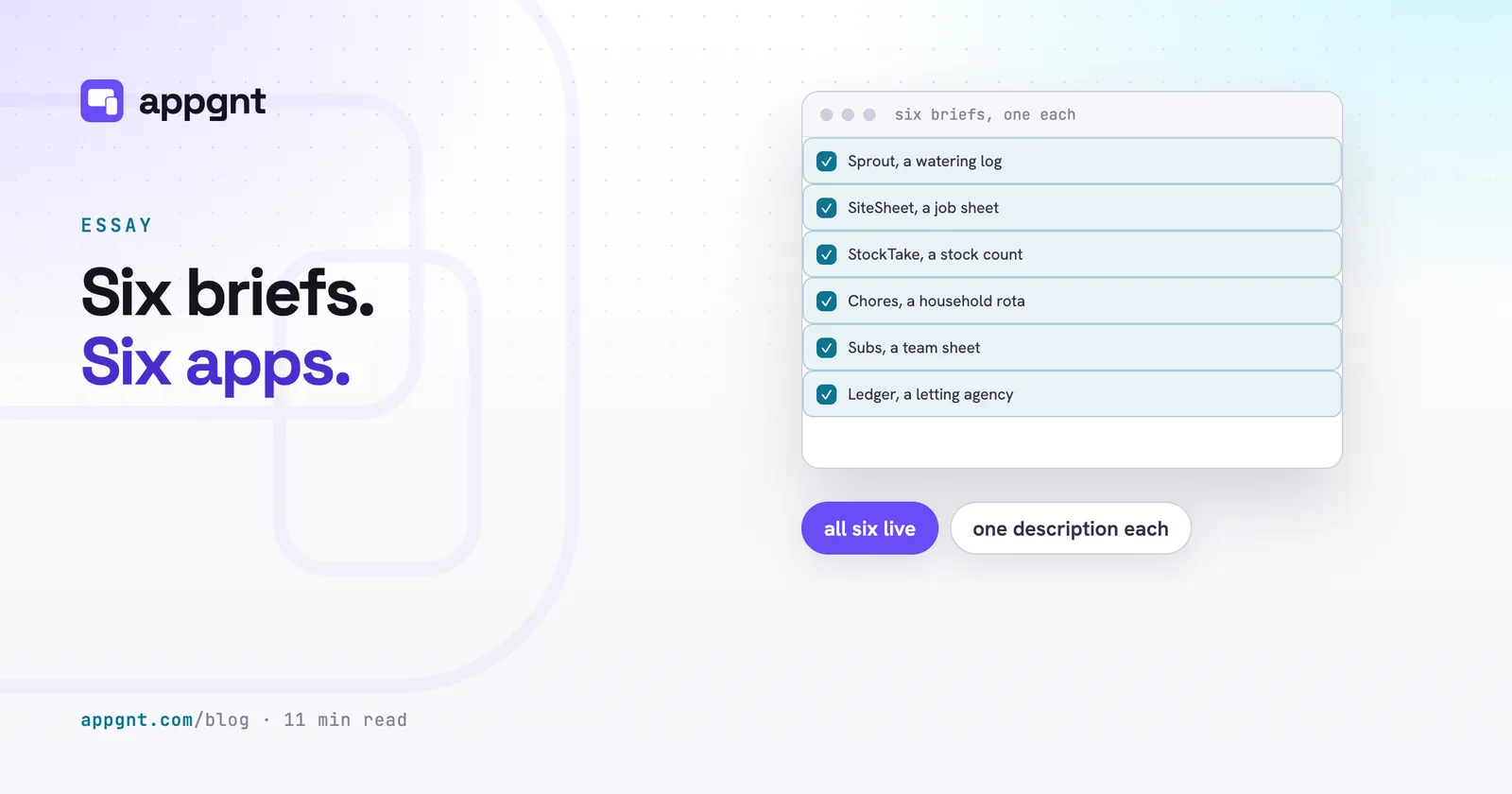
A gallery of screenshots is a claim, while an app you can open is evidence. Here is how we wrote the briefs for six live apps, from a houseplant log to a letting agency system, and what went into each one.
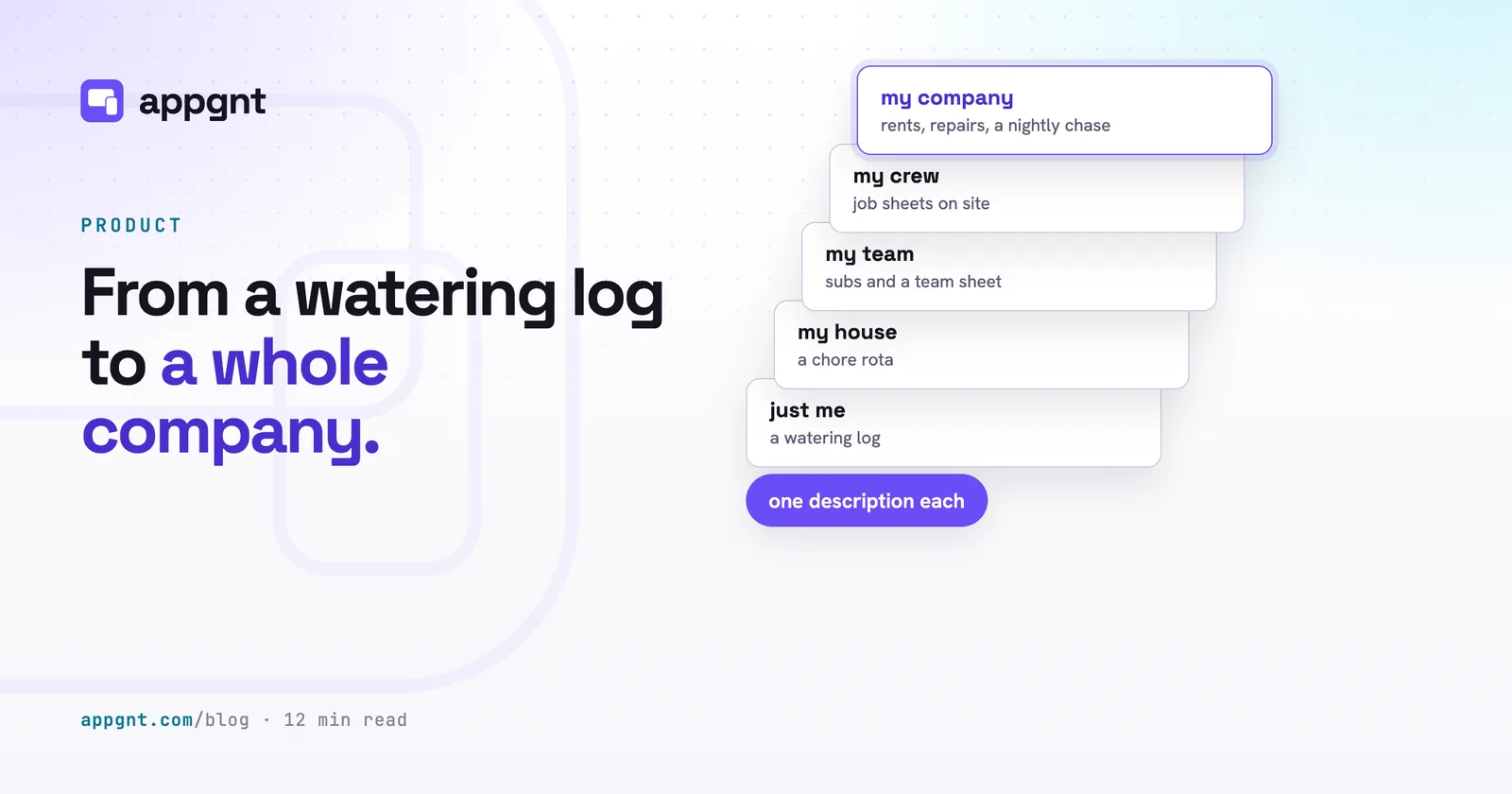
Most software ideas stall because testing them costs too much time or money. Here is what you can build when a working version takes an evening, from personal logs to complete operational tools.
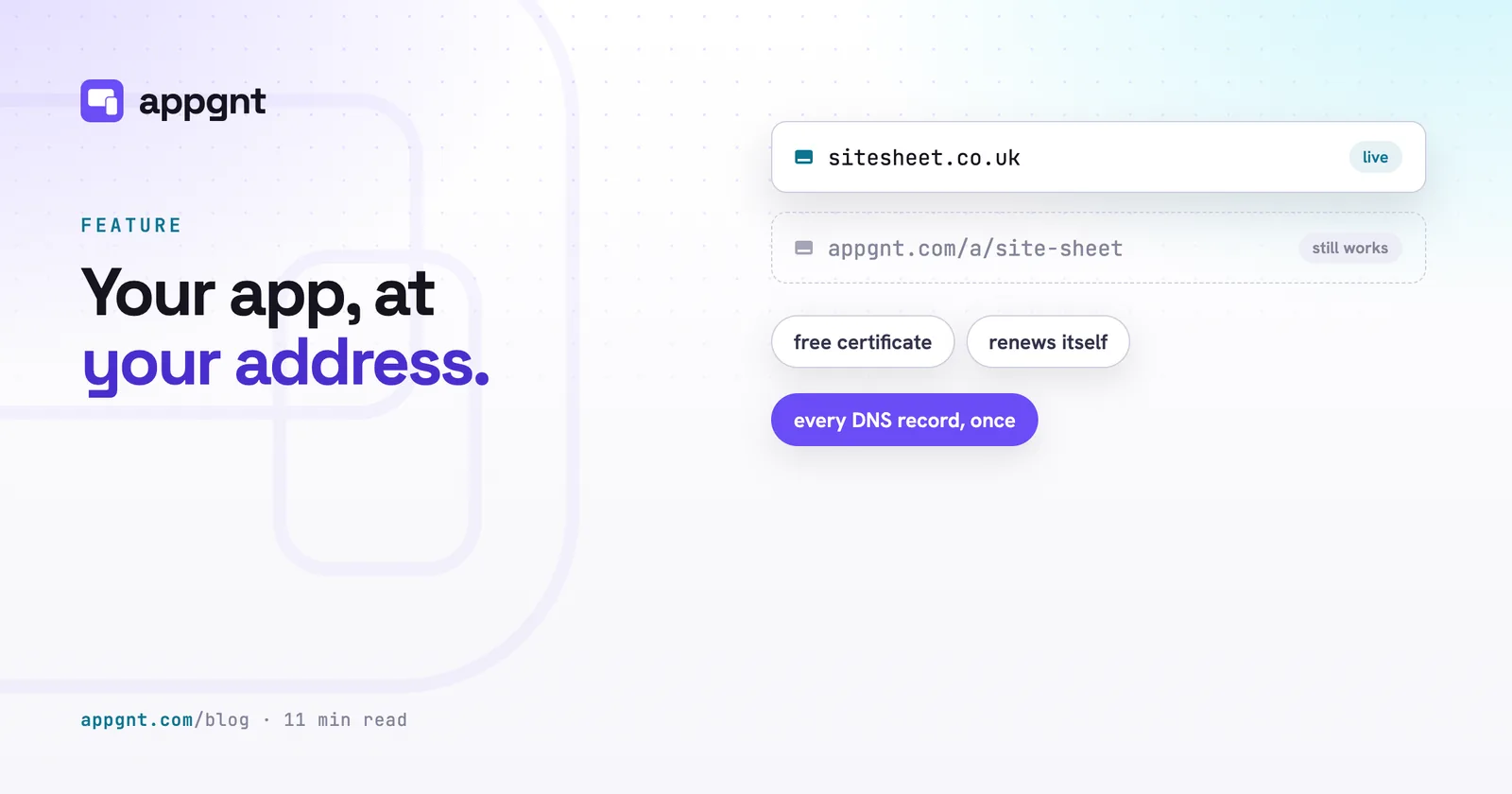
You can now map an appgnt app to your company domain or subdomain. Here is how custom addresses work, how setup takes five minutes, and why it matters for staff trust and store approval.
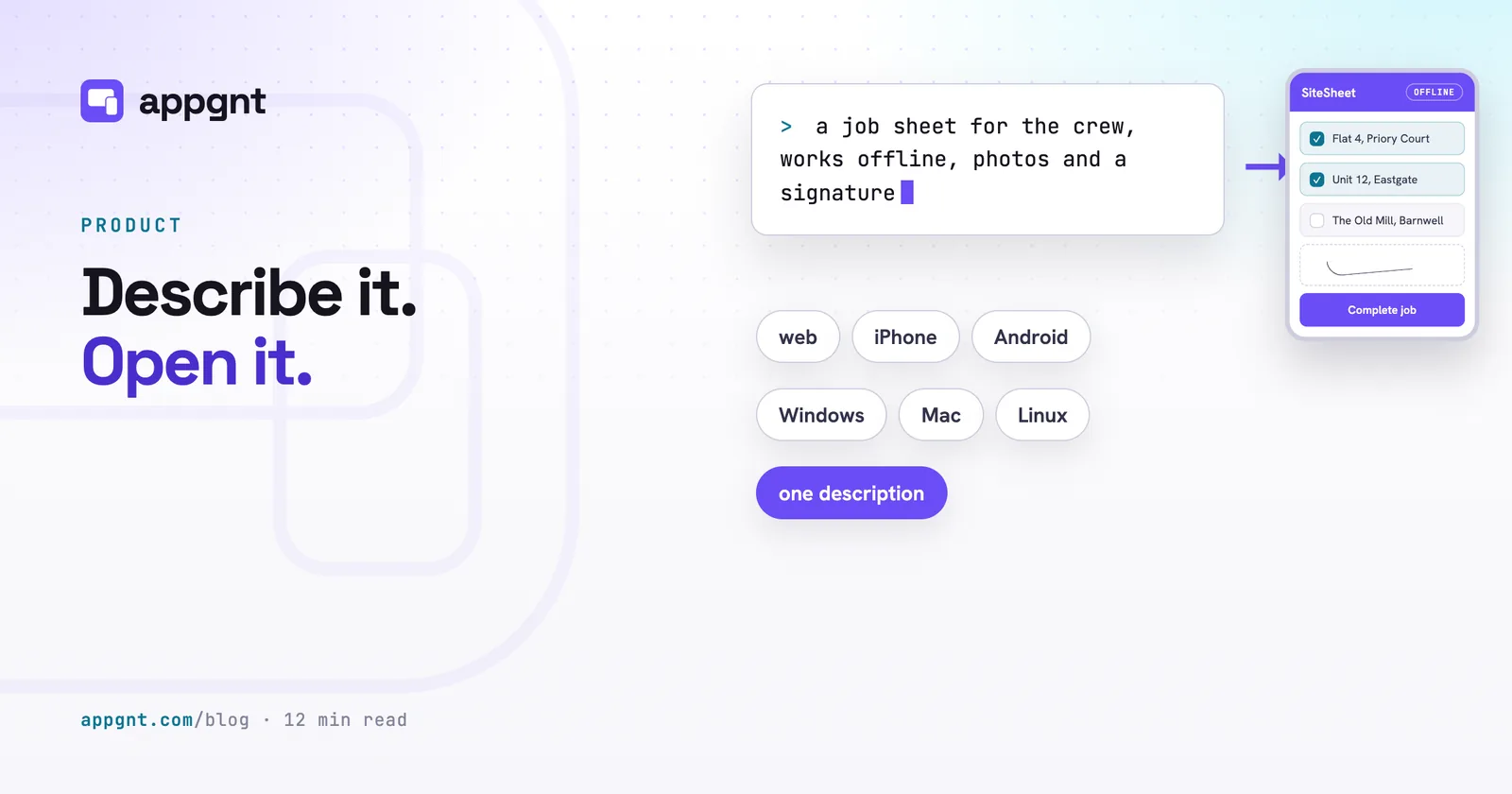
appgnt turns a plain business brief into a working cross-platform app in minutes. You get an installable web app, native desktop and mobile installers, and complete ownership of the underlying source code.
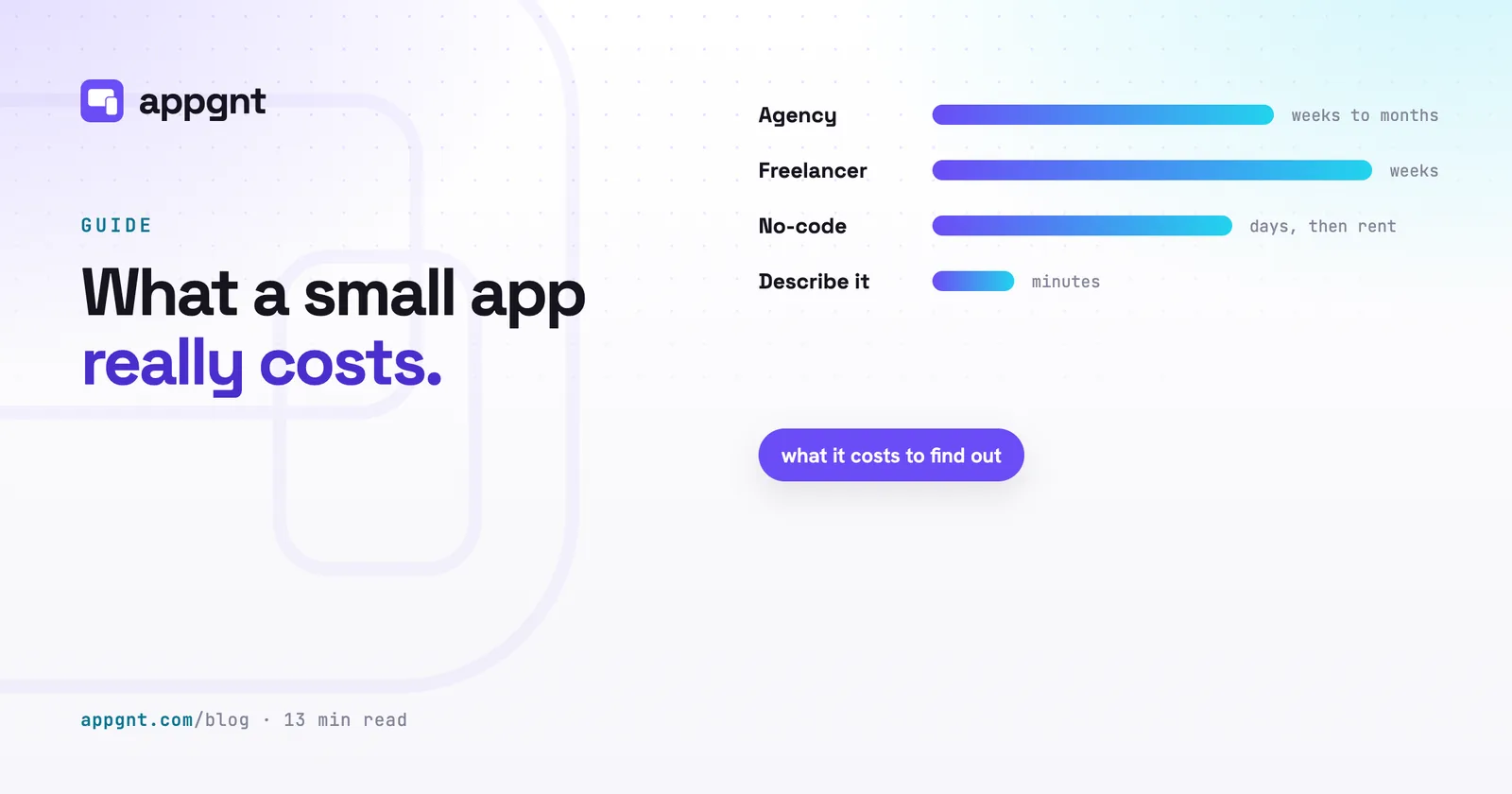
A realistic breakdown of what you pay an agency, a freelancer, a no-code platform, or a studio to build software for your business, and why the first quote is rarely the full bill.
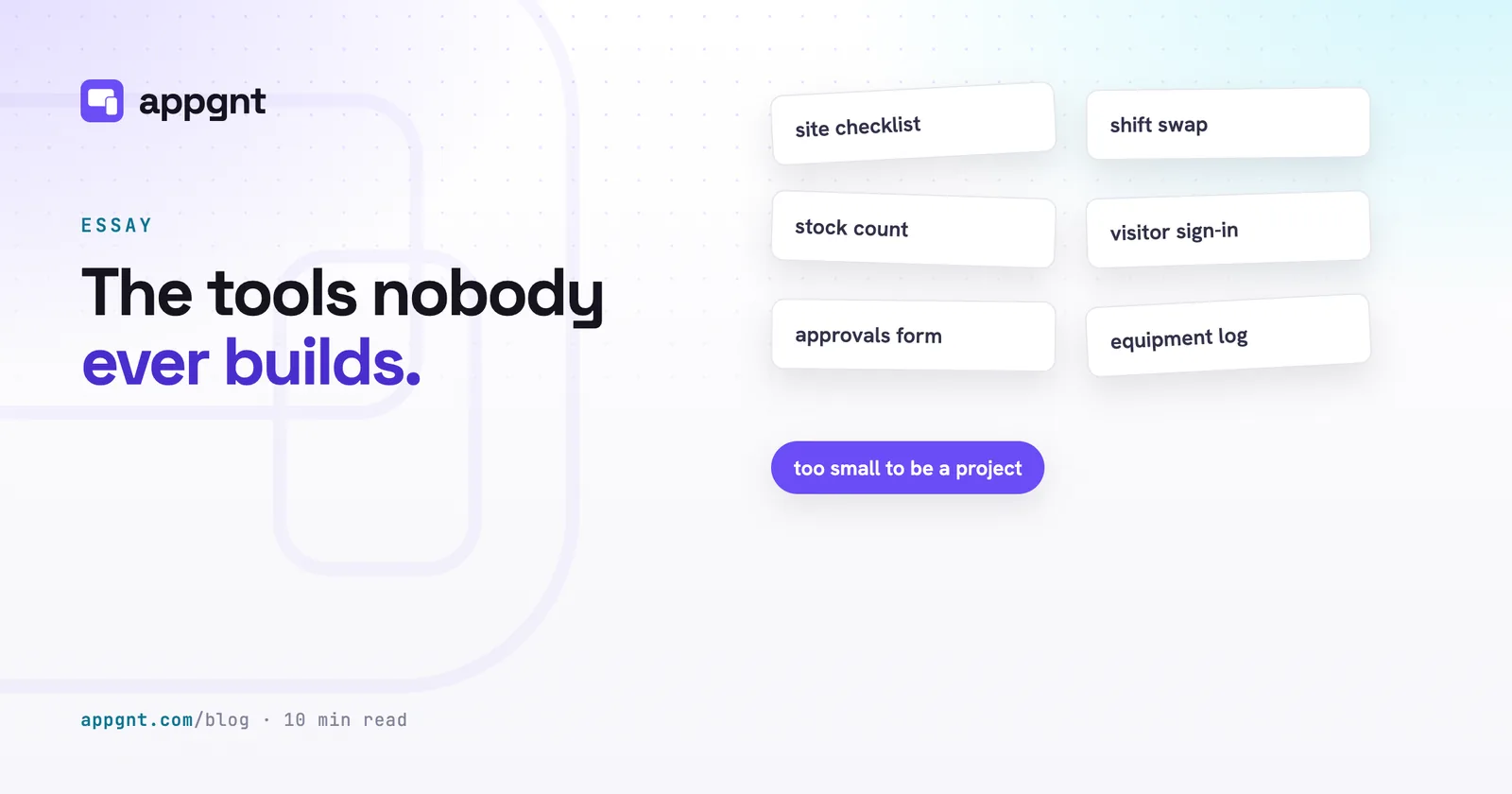
A look at why the site checklists, sign-in sheets and approval forms your business relies on stay stuck in spreadsheets, and how lowering the build cost changes what gets made.
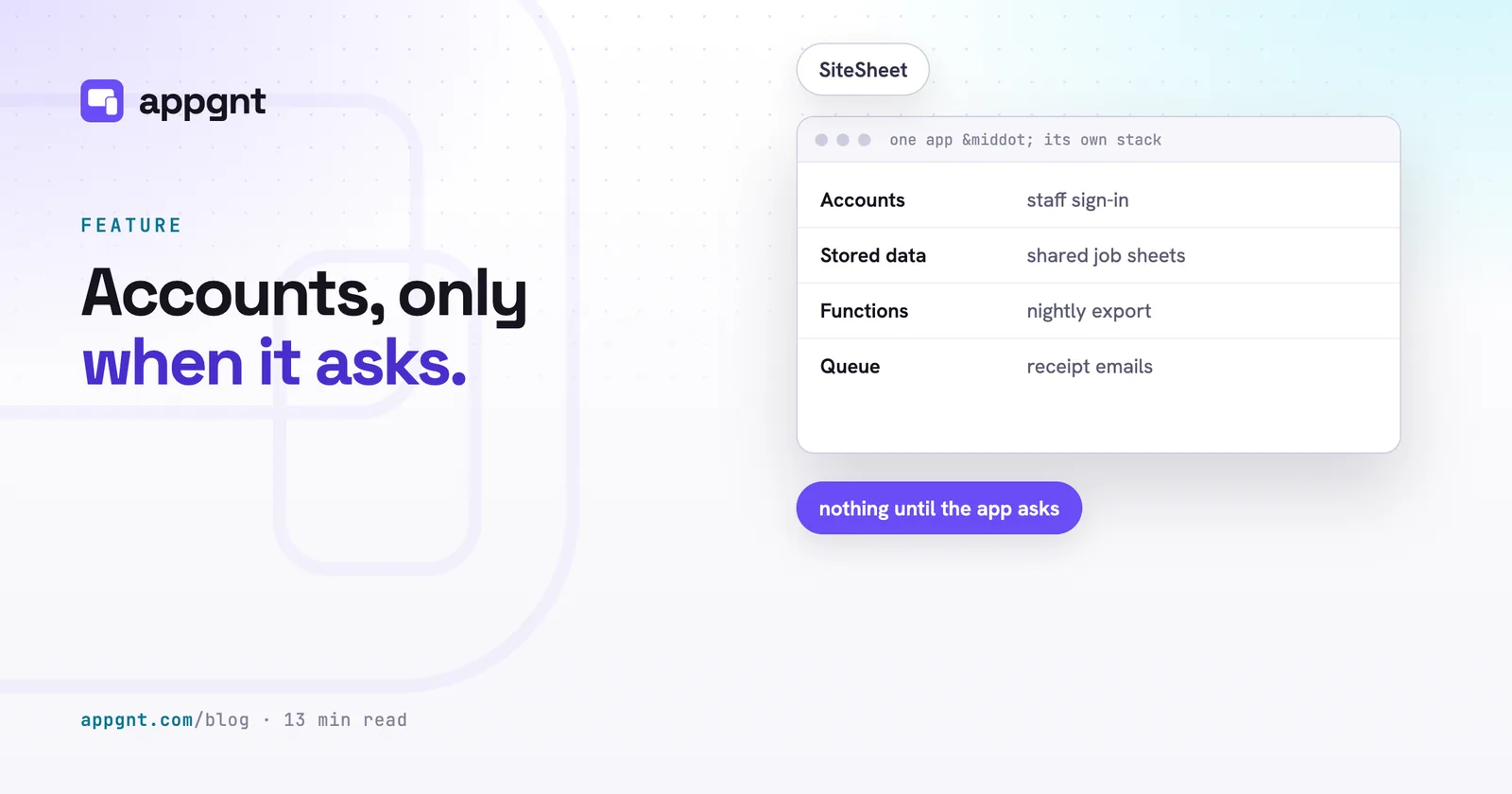
Most simple tools work fine with data stored on the phone. Here is what changes when your app needs shared logins, cloud data, background queues, and server code that keeps your private API keys safe.
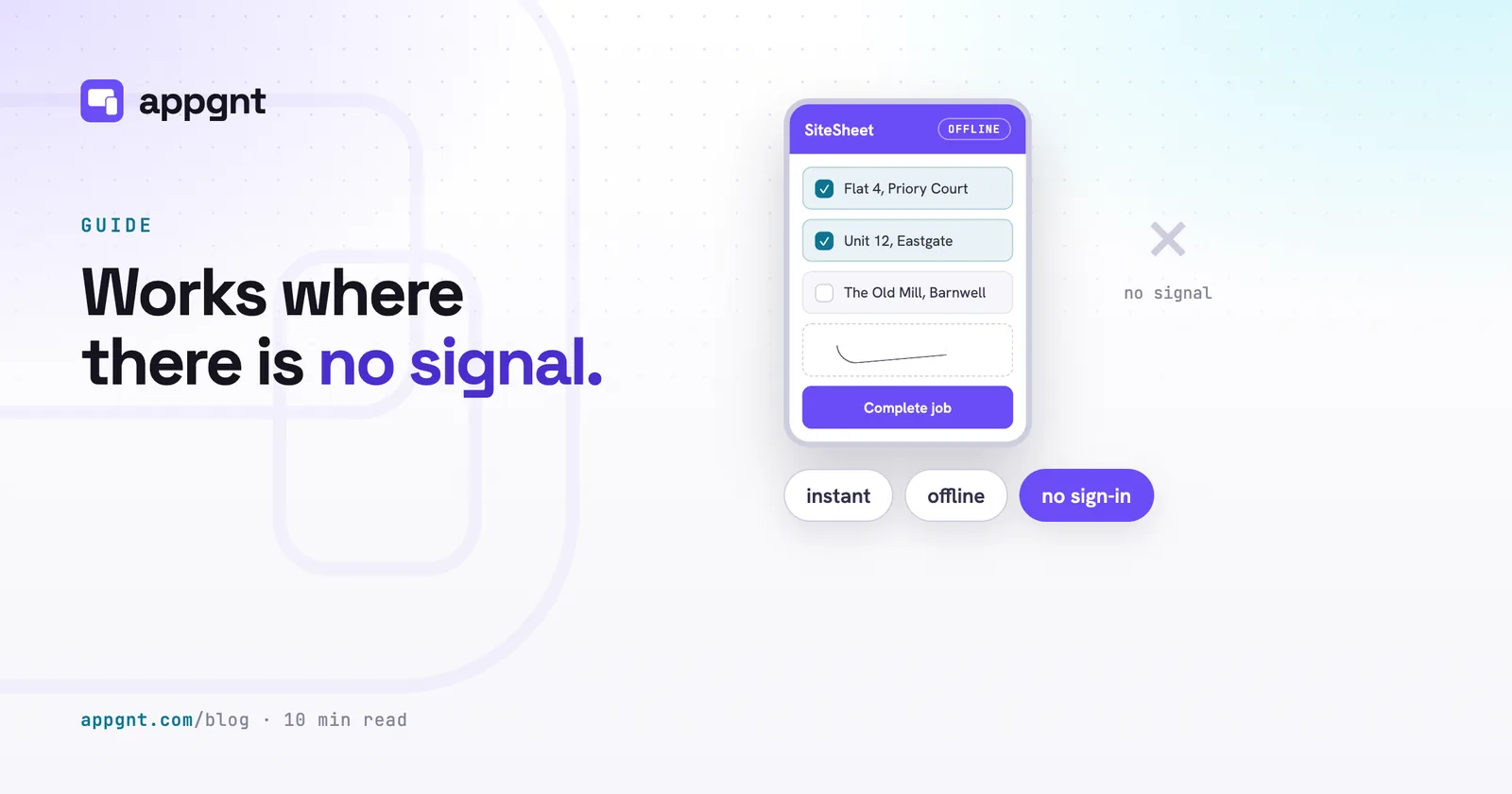
Most apps for warehouses, vans and sites do not need a server. Storing data on the handset makes tools fast and dependable without signal, leaving cloud backends for when you truly need them.
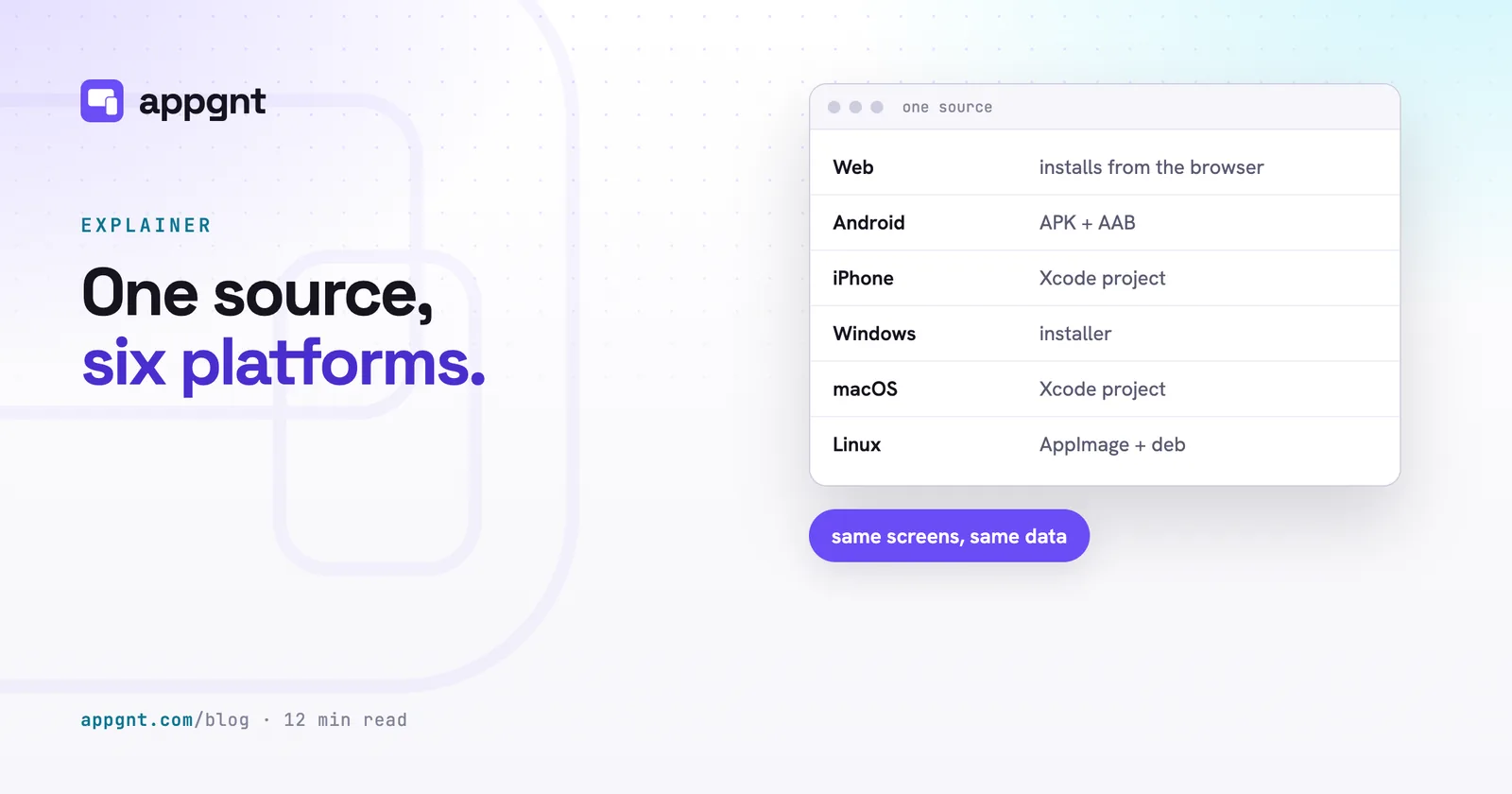
A look at how appgnt turns one prompt into a web app, native Android and iPhone builds, and desktop software, with an honest explanation of what native changes and what it leaves alone.
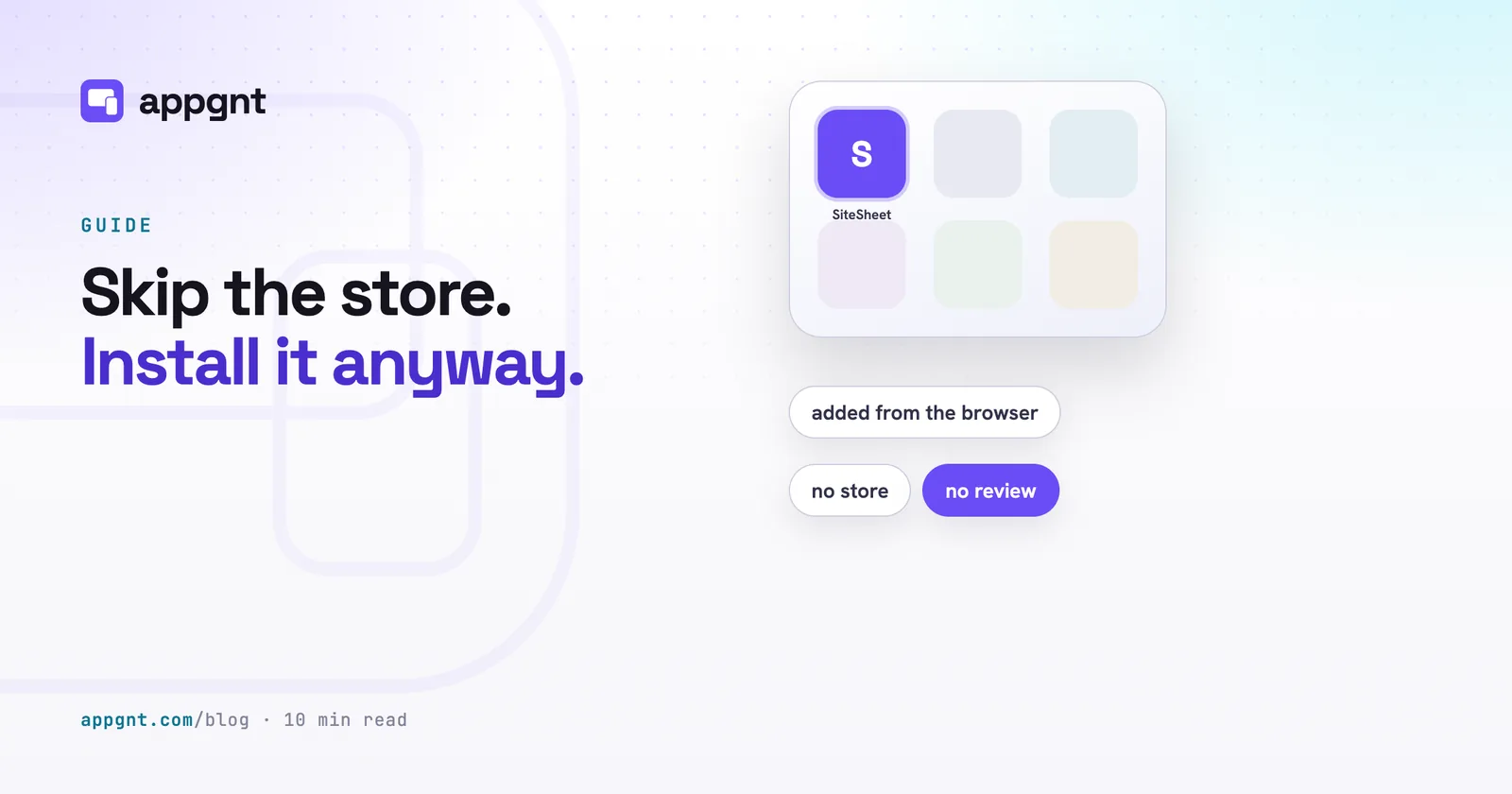
You do not need Apple or Google to put an app on a phone. Here is how browser installation works, what hardware features you keep, and where skipping the app store makes sense for your business.
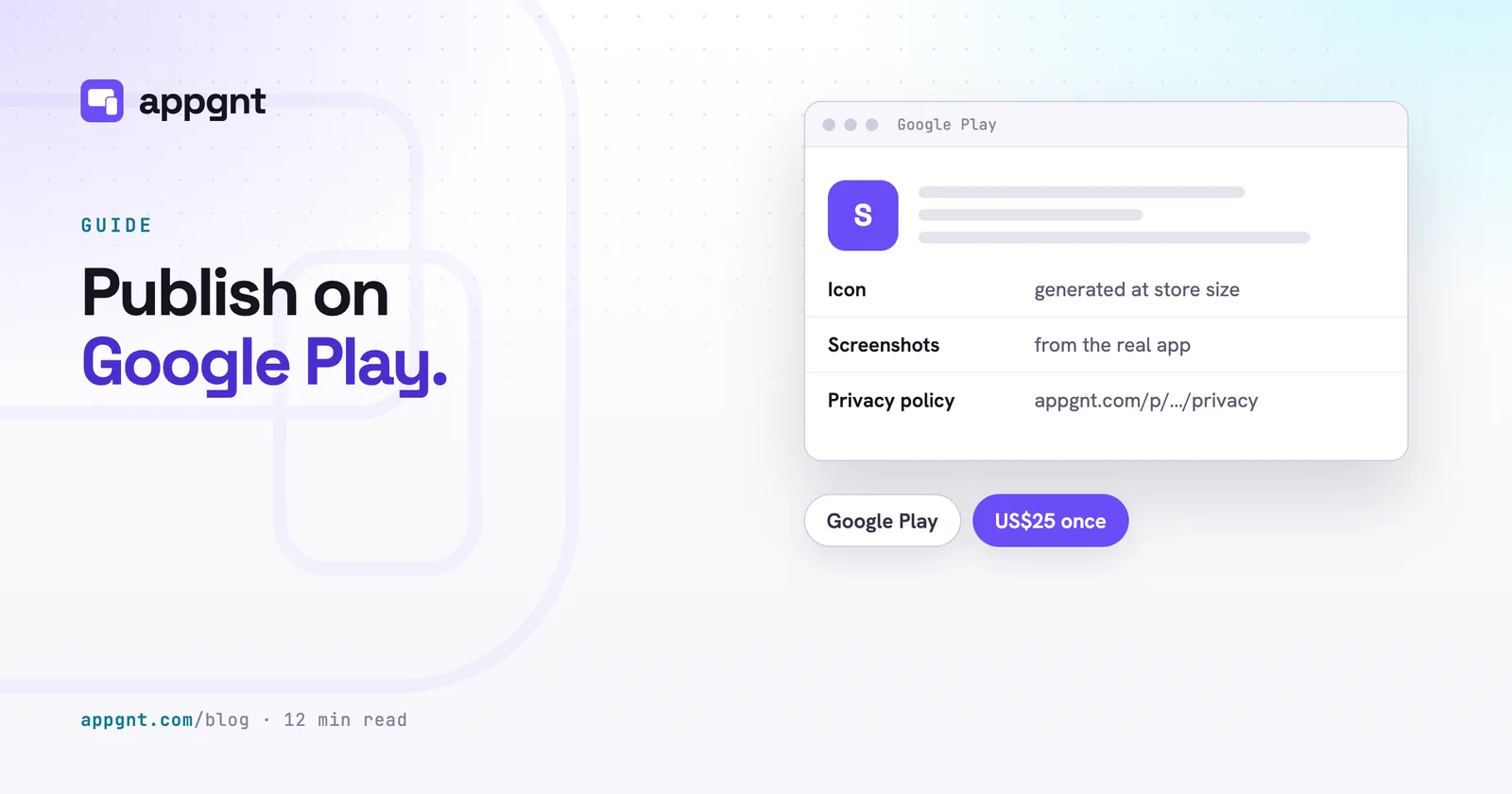
A direct walkthrough for getting an appgnt app into Google Play. We cover account registration, preparing your files, uploading the bundle, and passing review without delays.
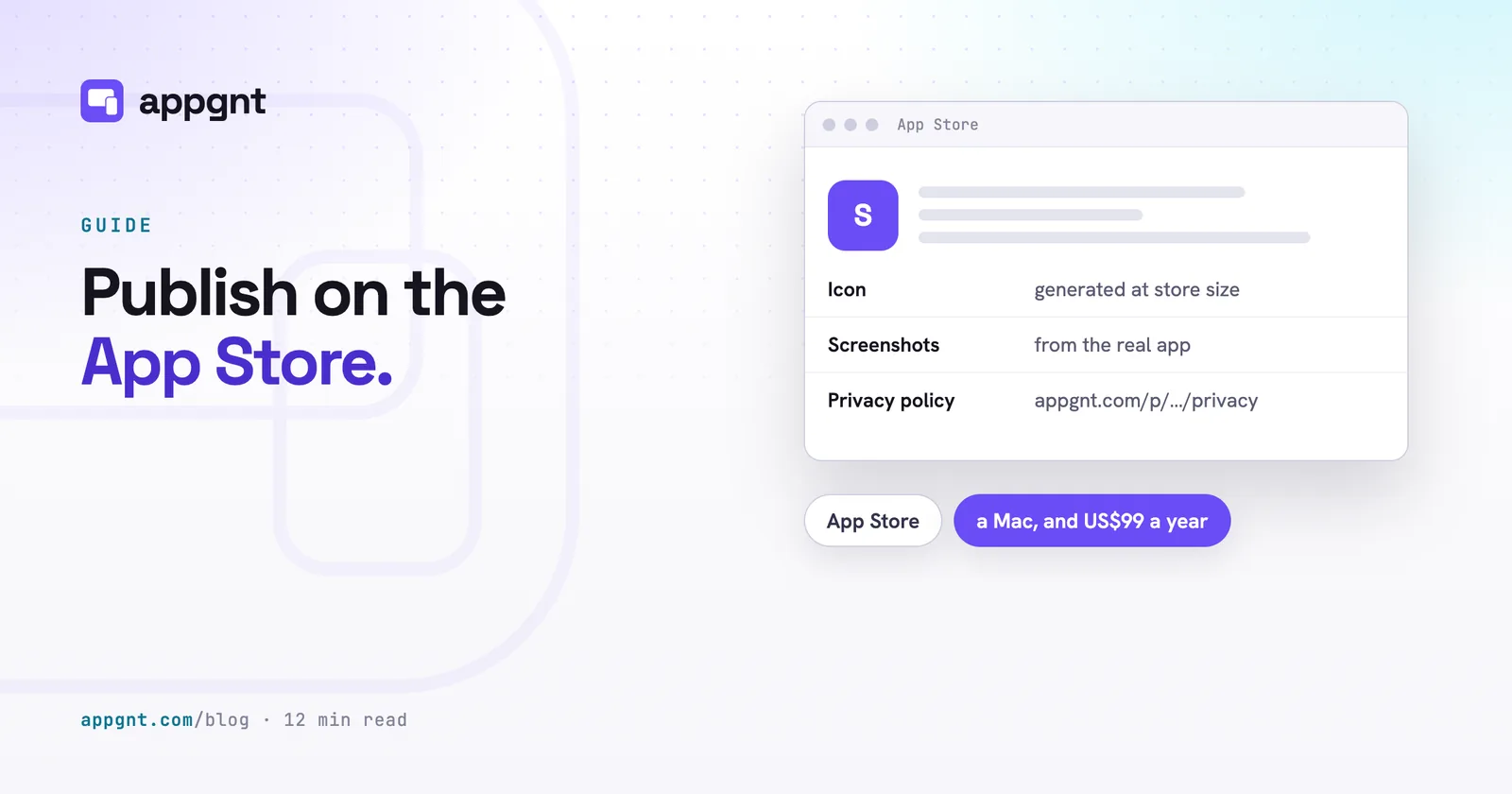
A practical guide to publishing your appgnt project to the Apple App Store, covering developer enrolment, the Xcode build step, store assets, and passing review.
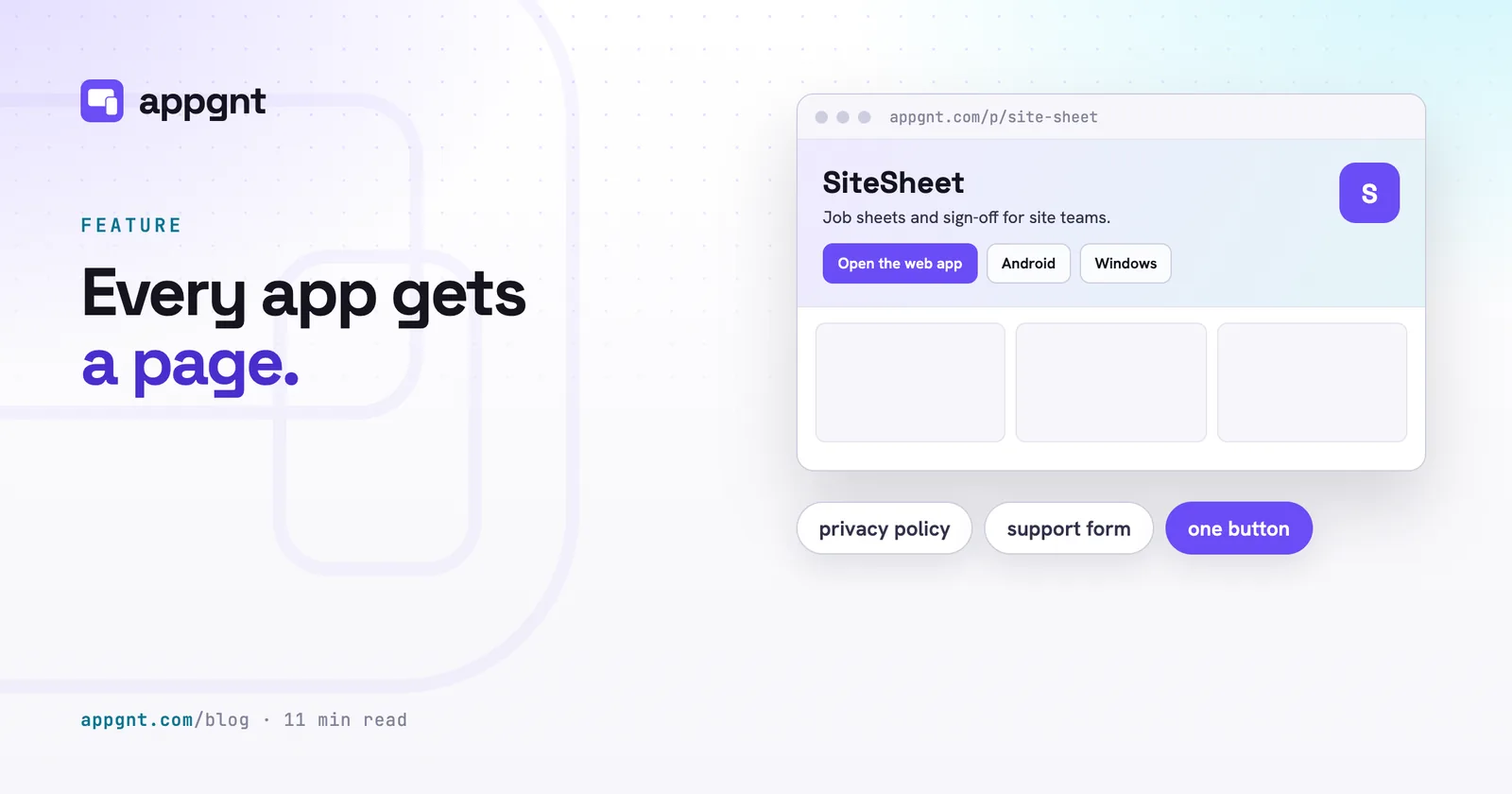
When you build an app for your business, you need a clean address to share with staff, customers and app stores. Here is how the app page and the Marketing kit give you everything you need in one click.
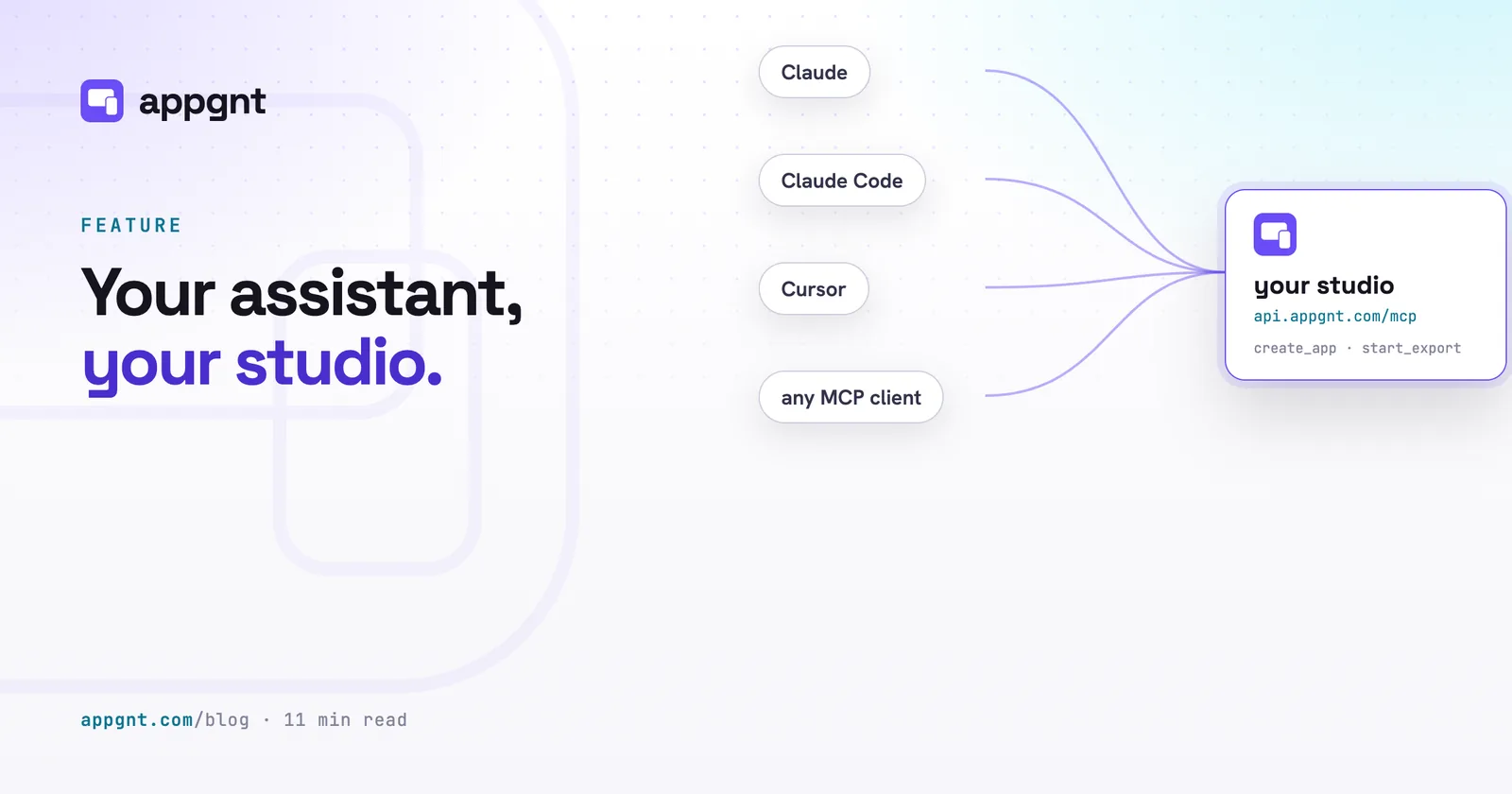
You can now connect your AI chat app, Cursor or your coding agent directly to appgnt. Here is how your daily assistant can draft, update and publish your business apps without copying code back and forth.
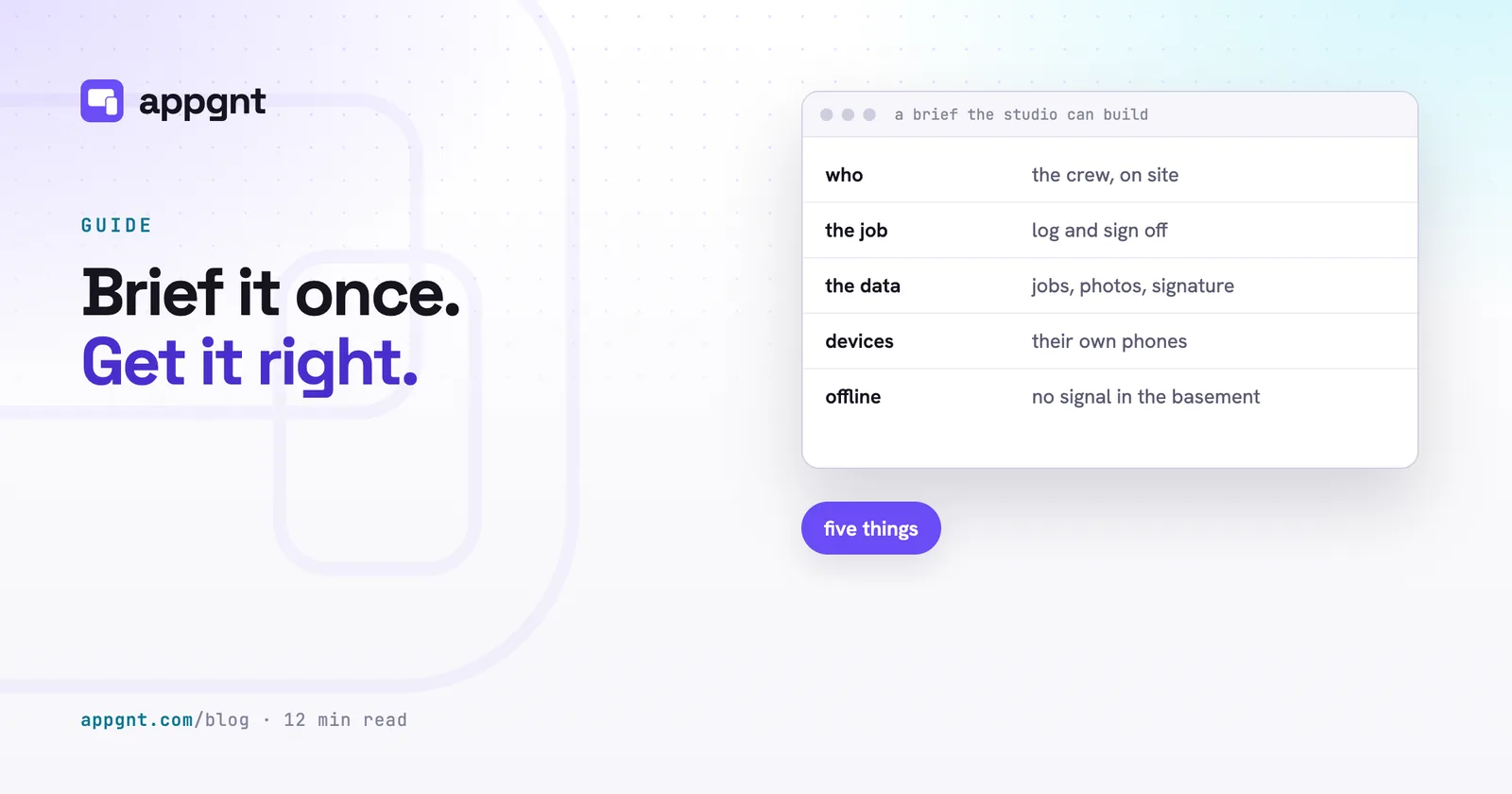
What to put in your first prompt to get a working business app on the first run, including the five essential facts, bad brief examples, and what the app must never do.
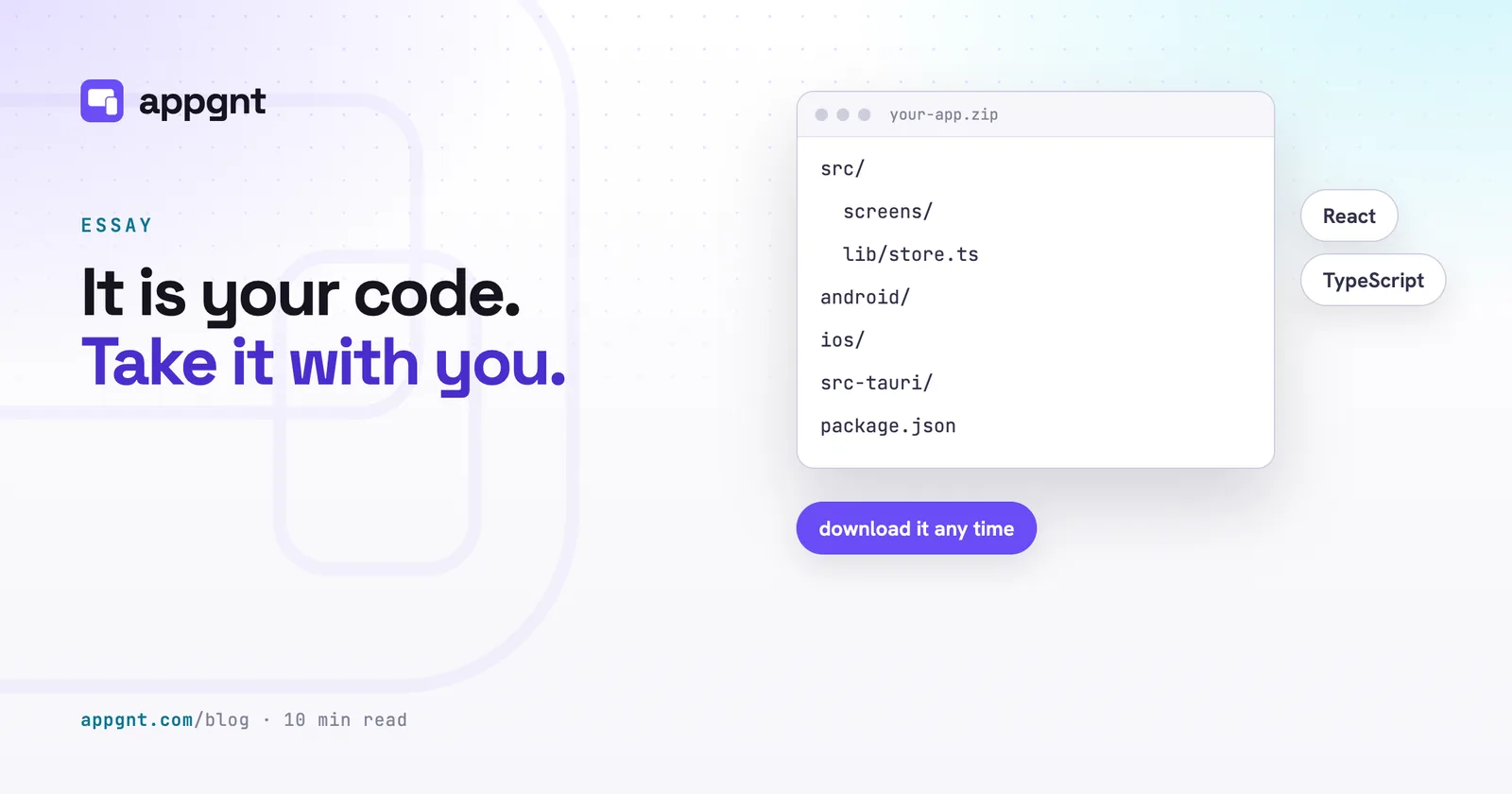
Every app built in the studio is an ordinary, standard project you can download as a zip at any time. Here is what owning the source means, what stays behind if you leave, and how to take it with you.
Describe what you need in plain words. We build a testable web app and native packages for mobile phones and desktop computers.